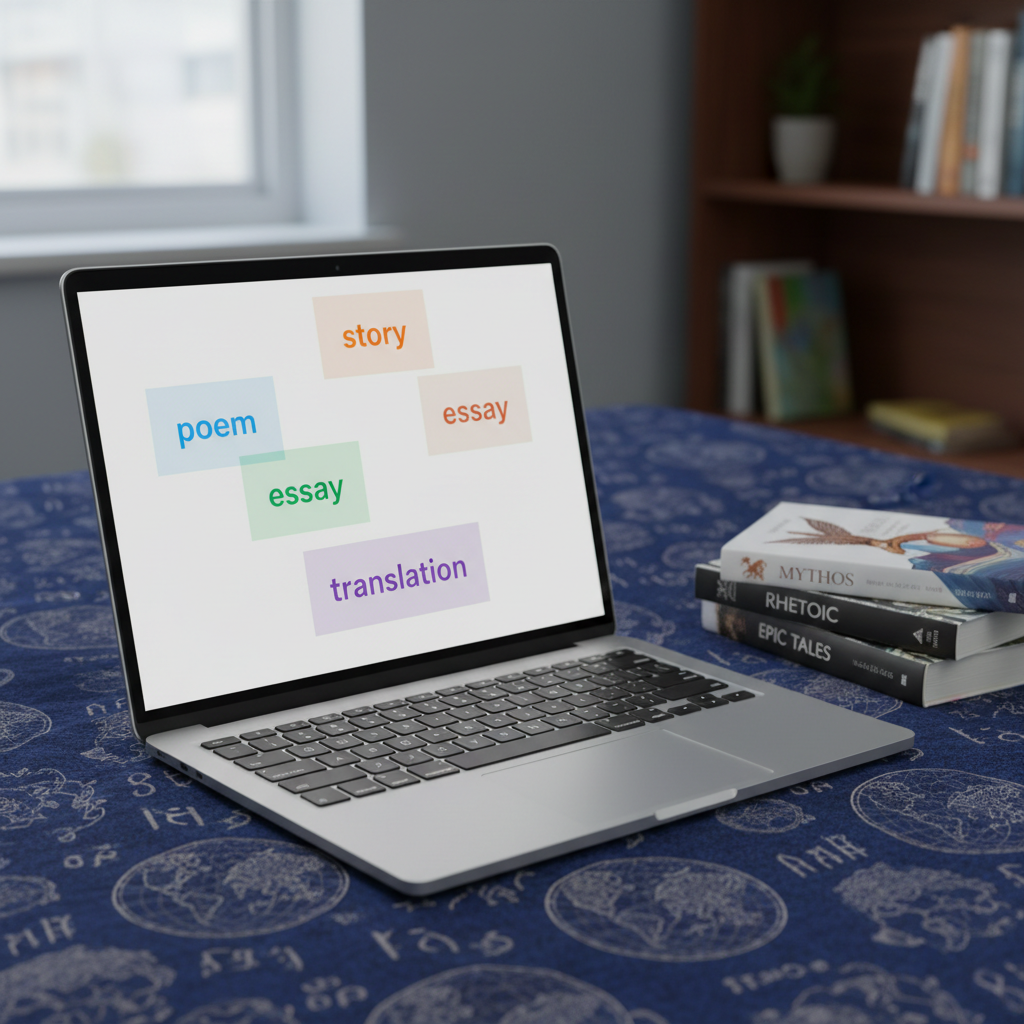
A glowing laptop screen shows a minimalist writing interface packed with overlapping digital documents labeled “poem,” “story,” “essay,” and “translation,” each in a different accent color. The laptop rests on a deep blue fabric surface printed with tiny world maps and ancient script glyphs, like a tapestry of global languages. Beside it, a stack of slim books on myth, rhetoric, and epic tales leans casually. Cool, soft studio lighting illuminates the scene from above, reflecting subtly off the laptop keys and casting a gentle gradient shadow behind the books. Shot from a three-quarter angle with the screen as the compositional focal point, the background fades slightly out of focus. The photographic realism feels modern, playful, and intellectually curious, symbolizing a worldwide community exchanging creative writing across genres and eras.

Craft Critique Hub

This title page presents guidelines for reading and commenting on essays, stories, and criticism, helping readers navigate debates about form, voice, and purpose.

Feature Essays
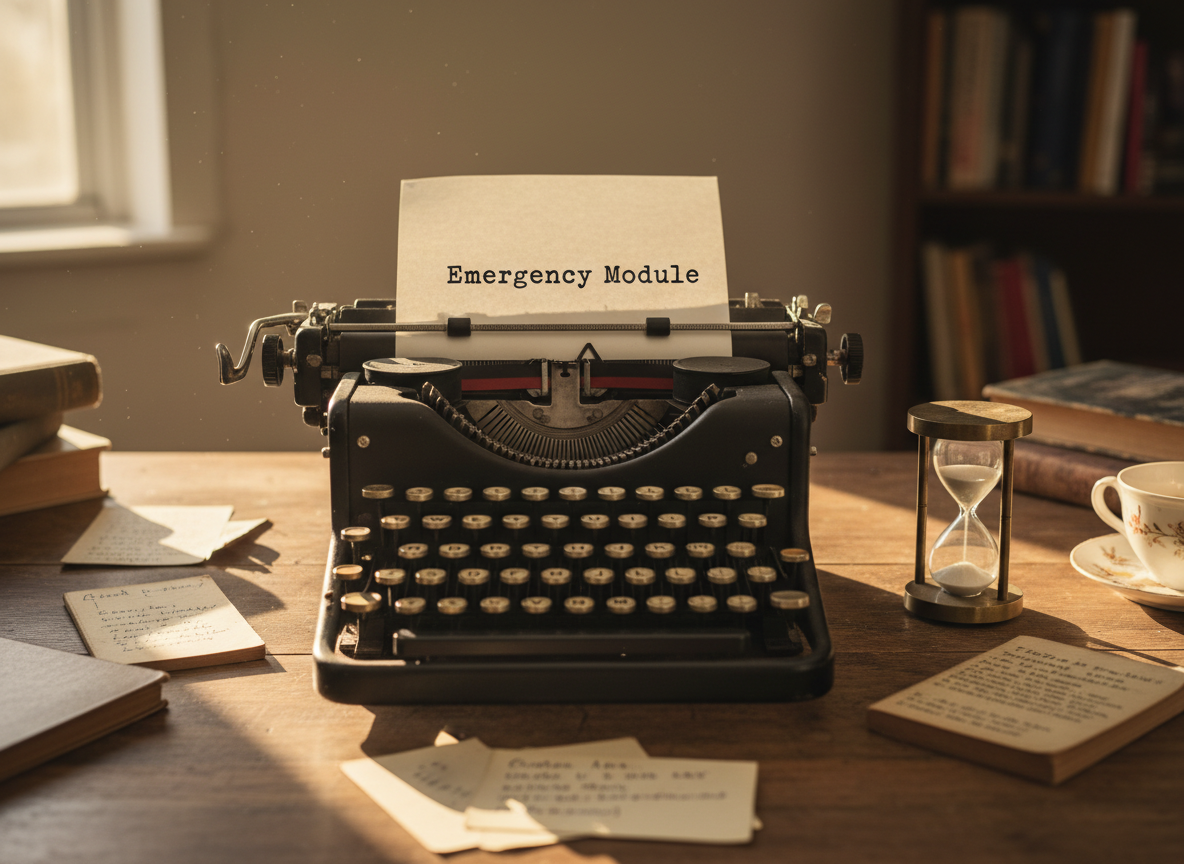
A well-worn vintage typewriter with matte black metal housing and round, cream-colored keys sits at the center of a scarred wooden writing desk. A single crisp page feeds through the roller, bearing the bold title “Emergency Module” in uneven ink. Around it lie scattered index cards, dog-eared poetry chapbooks, and a small brass hourglass mid-flow. Late-afternoon golden light spills through an unseen window, casting long, playful shadows and catching faint dust motes in the air. Shot at eye level with a shallow depth of field, the typewriter is in razor-sharp focus while the background melts into soft bokeh. The photographic realism feels warm, inviting, and slightly mischievous, evoking a global creative writing hub buzzing with possibility.

Editorial Focus

We welcome incisive essays, thoughtful critiques, and craft-focused pieces that clarify standards, length expectations, and inviting pitches for rigorous literary discussion.